

We deliver a four-part series in which Yasumasa Matsui visits the Hitachi Group's facilities in Hitachi City, Ibaraki Prefecture, the birthplace of Hitachi. He reports on the origins of Hitachi, current operations and R&D initiatives in the nuclear sector, human resources development for the future, and coexistence with local communities.
In the second installment, he visits Hitachi's Rinkai and Futo factories, which manufacture nuclear energy equipment, and reports on their manufacturing sites, training facilities, and testing facilities. Matsui explores the current state of frontline technologies that ensure nuclear safety, including metal casks supporting the nuclear fuel cycle, reactor internals for domestic nuclear power plants, training and seismic testing facilities, and the development of technologies to aid in the decommissioning of the Fukushima Daiichi Nuclear Power Station.
Located several hundred meters seaward across the JR Joban Line tracks from Hitachi Origin Park, the Hitachi Works Rinkai Factory serves as a manufacturing hub for the nuclear energy business. It manufactures and tests equipment for nuclear power plants and nuclear fuel reprocessing facilities, and conducts training for maintenance operations. Hitachi is a participant in the international ITER project, which aims to make fusion energy a reality. The Rinkai Factory also manufactures prototypes of key parts for the ITER fusion experimental reactor, which is currently under construction in France.
Upon his arrival at the factory, Matsui was briefed on factory tour precautions before donning a helmet, goggles, work clothes, and gloves. He then proceeded to the building known as the RC Building. Here, metal casks used for the safe transportation and storage of spent fuel from nuclear power plants are manufactured.
Nuclear power plant fuel is replaced with new fuel after four to five years of use, and the old fuel is stored as spent fuel. There are two storage methods: wet and dry. Spent fuel freshly removed from the reactor is hot and emits high levels of radiation. It is first placed in a spent fuel pool filled with water for wet storage, where it is cooled.
After sufficient cooling in the pool, the fuel is transferred to metal casks for dry storage. Dry storage, which stores spent fuel using natural air convection for cooling without water or electricity, is characterized by its ease of maintenance and management and superior convenience in terms of storage location and transportation.
Spent fuel contains uranium that can still be utilized, and plutonium newly generated through nuclear fission reactions. The process of recovering these materials through reprocessing, mixing them, and reusing them as mixed oxide (MOX) fuel for further power generation is called the nuclear fuel cycle. It is expected to lead to more efficient utilization of resources and a reduction in radioactive waste. To facilitate this nuclear fuel cycle, construction and operation of the Rokkasho Reprocessing Plant—a dedicated facility for reprocessing spent nuclear fuel in Rokkasho Village, Aomori Prefecture—are currently underway. The metal casks, which play the vital role of transporting spent fuel to the Rokkasho Reprocessing Plant and storing it while awaiting reprocessing, are essential products for establishing the nuclear fuel cycle.
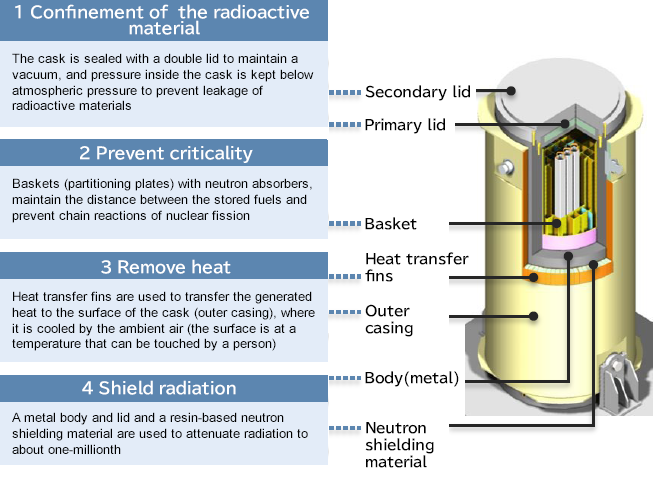
Metal casks for spent fuel transportation and storage
Hitachi is a participant in the construction of the Rokkasho Reprocessing Plant and is working to meet new regulatory requirements while manufacturing metal casks. Hitachi's metal casks—which have started operational use ahead of competitors—are vessels equipped with buffers (shock-absorbent material), designed for both transportation and storage. These robustly constructed metal casks are extremely heavy, with a total weight of over 100 tons, including the spent fuel. To facilitate smooth movement around the storage facility, a technology utilizing air pressure to lift them slightly off the floor has been developed and adopted.
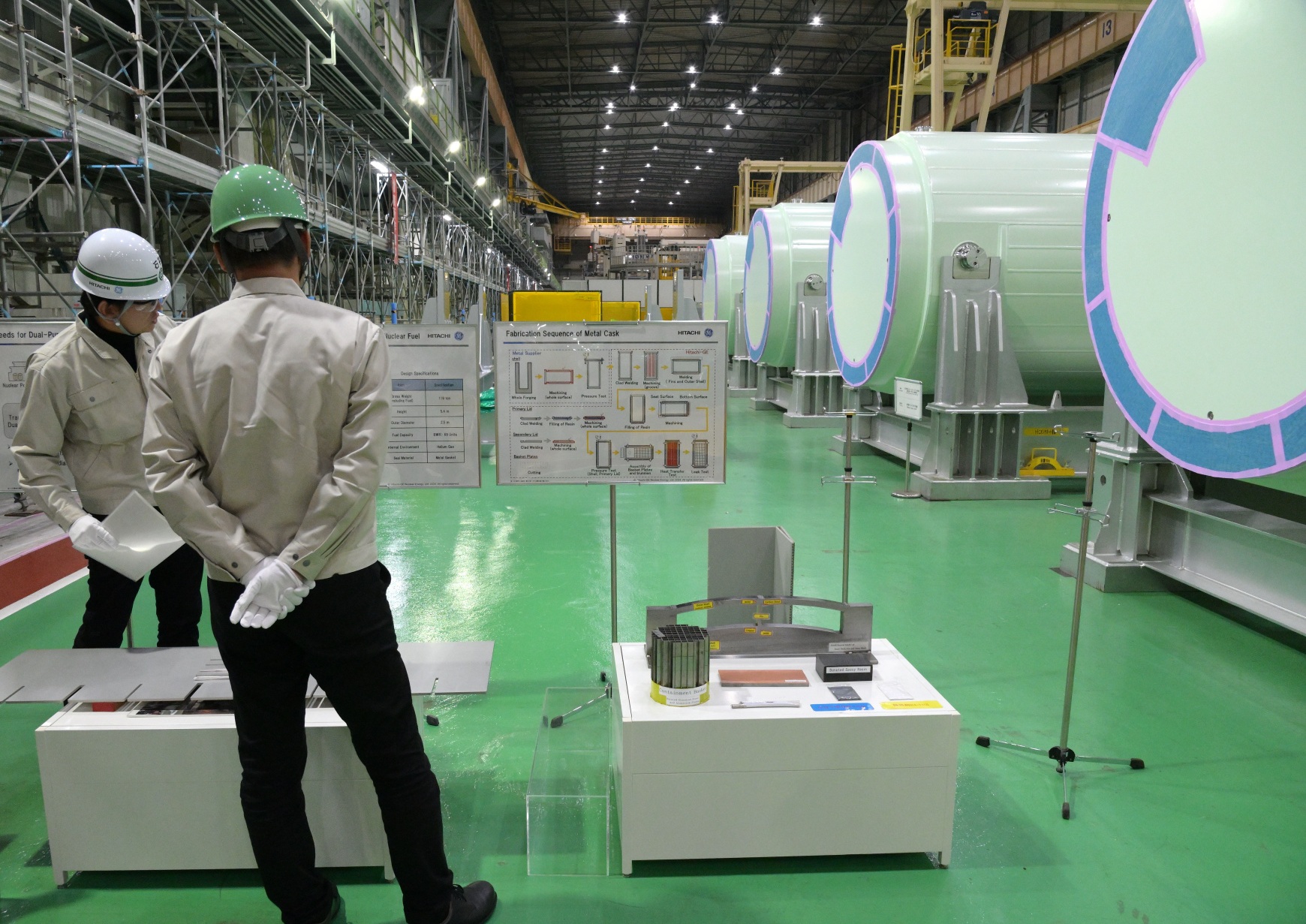
“Hitachi's metal casks can hold 69 spent fuel assemblies each, and seeing them up close really brought home their size. The casks must simultaneously fulfill various safety functions, including containment of radioactive materials within the spent fuel, radiation shielding, heat dissipation, criticality prevention, and durability against impacts such as falls. For example, rocket parts demand strict space-grade quality down to every single screw. Nuclear-grade quality demands exactly the same level of precision. The casks must be enormous, robust, and with absolutely no gaps allowed, so it's easy to imagine the advanced technology required,” Matsui remarks.
Matsui's next stop was the storage facility for reactor internals destined for the Ohma Nuclear Power Plant operated by Electric Power Development Co., Ltd. (J-Power) in Ohma-machi, Aomori Prefecture. Construction work on the Ohma Nuclear Power Plant, which began in May 2008, was initially progressing with the aim of starting operations in 2014. The reactor, designed and built by Hitachi, was a full MOX-ABWR (Advanced Boiling Water Reactor), a type of reactor developed and designed with the goal of using MOX fuel for all of its fuel. The use of MOX fuel is an essential requirement for establishing the aforementioned nuclear fuel cycle. The plan for Ohma Nuclear Power Plant was to gradually increase the proportion of MOX fuel used after coming online, ultimately achieving the world's first use of 100% MOX fuel for the entire core.
However, construction was suspended following the March 2011 Fukushima Daiichi Nuclear Power Station accident. Construction is now proceeding while implementing safety measures, including enhanced earthquake and tsunami countermeasures and severe accident management measures based on the new regulatory requirements enacted in 2013.
Hitachi had begun manufacturing reactor internals prior to March 2011, and major parts such as the steam dryer, upper grid plate, and shroud were already completed. Since construction was suspended, Hitachi's Rinkai Factory constructed storage facilities for these components. Measures to prevent deterioration, such as nitrogen purging, and regular inspections are conducted to maintain quality while awaiting the start of reactor installation work.
Although these reactor internals will no longer be visible once the reactor is assembled and operation begins, this storage facility allows close-up viewing of the shroud head, which is the top cover of the shroud, and Matsui examined it intently.
The shroud is a cylindrical structure that surrounds the fuel assemblies within the core. It holds the fuel assemblies and plays a role in creating the channels for cooling water to flow inside the core. The shroud head is a dome-shaped metal plate, positioned at the top of the shroud, and integrated with the steam separator.
The steam separator consists of numerous metal cylinders with a special internal structure. As its name suggests, it is a device that separates gas and water. Boiling water reactors (BWRs), including the ABWR, operate by boiling the cooling water within the reactor and sending the resulting steam directly to a turbine for power generation. However, steam freshly generated in the core contains a large number of water droplets, and sending this steam directly to the turbine would lead to reduced efficiency and pipe corrosion. For this reason, steam is first passed through a steam separator to remove water droplets, then through a steam dryer to remove as much moisture as possible before it is sent to the turbine.
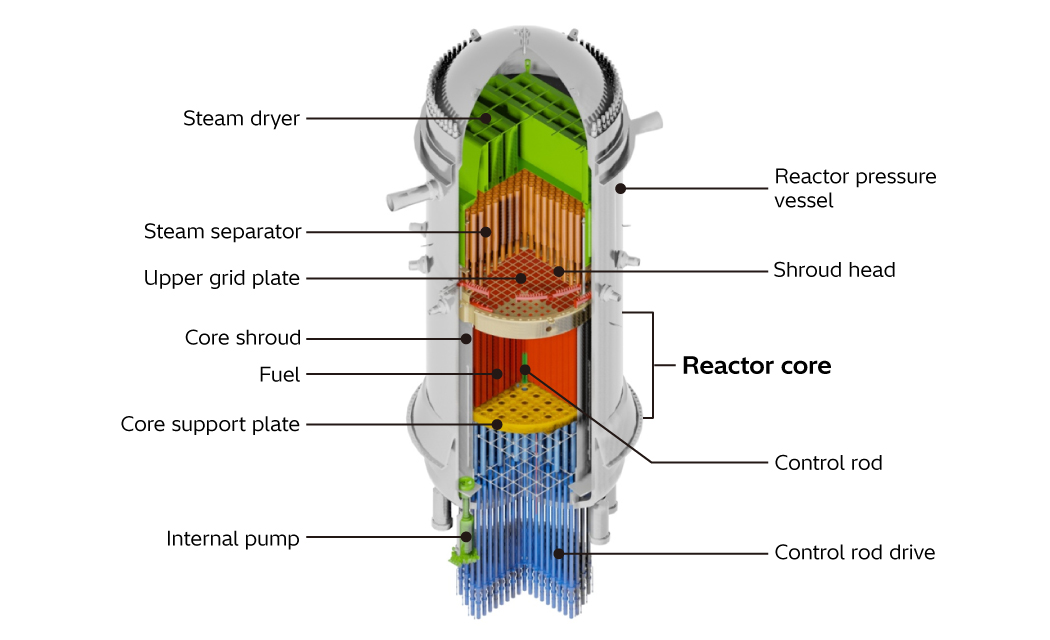
Reactor internals of an advanced boiling water reactor (ABWR)
The shroud head is manufactured by processing a massive circular metal plate into a dome shape, drilling circular holes using a lathe, then welding the metal cylinders of the steam separator into these holes. There is a total of 349 cylinders, each welded individually by hand. The work is very difficult, with some sections requiring welding to be performed while viewing the workpiece in a mirror, since direct viewing is not possible. Exceptional workmanship is also required to meet the high precision, durability, and reliability demanded of internal reactor parts. Only a handful of highly experienced engineers within Hitachi are capable of performing such welding. The welding of this shroud head was handled by about ten skilled engineers.
On close observation, Matsui was visibly impressed by the high level of skill, saying the following.
“I am told that smooth, even ripples in the weld bead (the fused metal section) are proof of high welding skill. The bead on this shroud head was exceptionally clean everywhere, truly masterful craftsmanship. Passing on this kind of skill is also extremely important.”
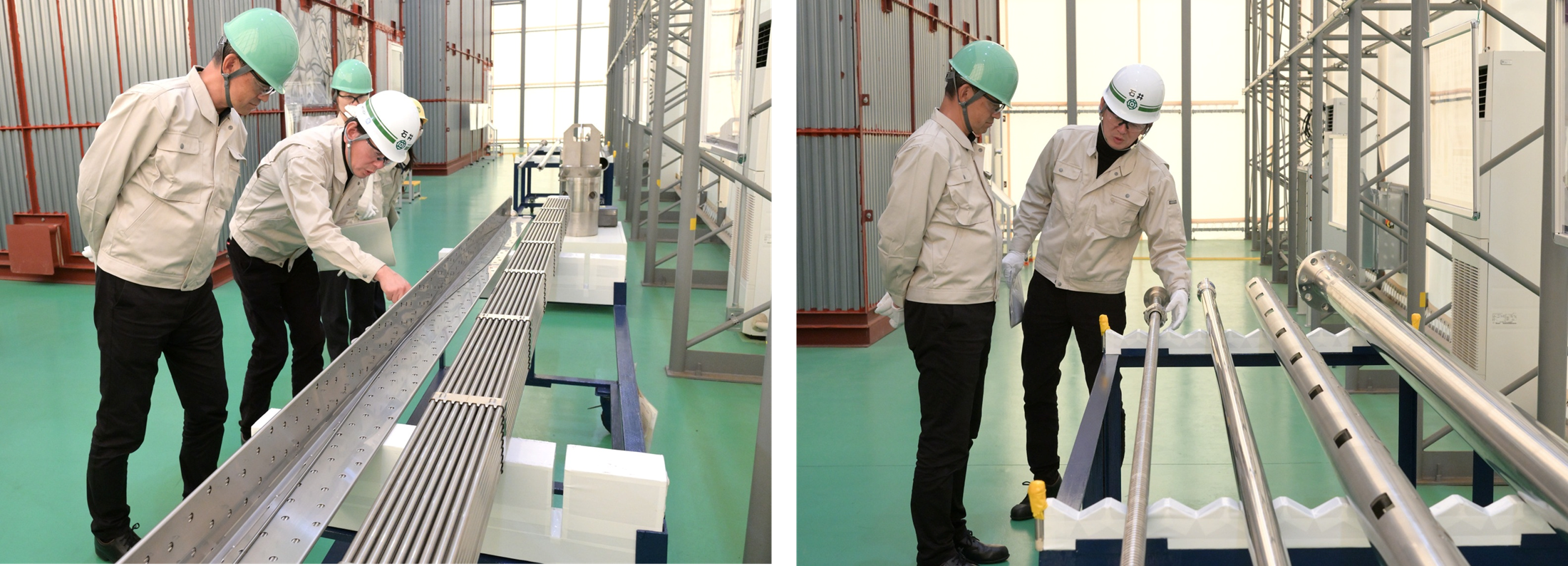
Matsui receives an explanation of the displayed control rods and control rod drive. “The control rods and the drive mechanism for their insertion and withdrawal are critically important devices for controlling or stopping the nuclear fission reaction. Moving something this long with such precision means there can be absolutely no deviation in the dimensions of any of the parts. It must be no simple task to precisely machine something this large while carefully assessing the material properties of the metals. Since reactor parts are basically manufactured according to the (current stage of the manufacturing) process and shipped immediately for installation upon completion, you rarely get to see the actual units. This was a valuable experience,” says Matsui.
Next, Matsui headed to the BWR Preventive Maintenance Technology Center. Hitachi not only manufactures equipment for nuclear energy facilities but also handles quality assurance and quality control tasks such as installation inspections and periodic inspections. The BWR Preventive Maintenance Technology Center was constructed to conduct training aimed at improving the efficiency of such inspections, check work conditions when performing maintenance work on reactor equipment, and provide operational training. It simulates an actual BWR plant from the reactor building operating floor down to the bottom of the reactor pressure vessel (RPV) at full scale. The center's in-reactor training facility, which simulates a real reactor, uses a cylindrical test vessel filled with actual water to a depth of approximately 26 meters for underwater work training and checking.
This in-reactor training facility was utilized after the Fukushima Daiichi Nuclear Power Station accident for confirming procedures to remove debris from the spent fuel pool of Unit 4, selecting and developing necessary equipment, and conducting actual work training.
At the time of the accident, Unit 4 was offline for a scheduled inspection. However, hydrogen combustion occurred due to hydrogen-containing vent gas that flowed in from Unit 3, causing significant damage to the upper part of the reactor building. Debris from this damage was scattered across the operating floor and inside the spent fuel pool. To take the first step toward decommissioning—removing fuel from the spent fuel pool—this debris needed to be cleared.
Hitachi first removed debris from the operating floor, then proceeded to remove debris that had sunk into the spent fuel pool. To do so, the company first developed survey equipment to capture images inside the pool. Based on these images, they created a debris distribution map, then placed representative simulated debris (matching the size and shape of actual debris) in the in-reactor training facility. Using this simulated debris, they explored the types of handling equipment that could be used for removal, and also developed the equipment itself. Because the time each worker could spend in the high-radiation environment was limited, meticulous plans were made, down to the smallest details, including personnel assignments and procedures, and repetitive training was conducted.
As a result of these thorough preparations, the debris removal work on-site progressed smoothly. Tokyo Electric Power Company Holdings (TEPCO) began fuel removal in November of the same year, and by late December 2014, all 1,535 fuel assemblies had been removed. Upon learning of the training conducted at the time, Matsui expressed surprise, saying, “TEPCO mentioned in their press conference back then that they had conducted prior training, but I had no idea it was this thorough.”
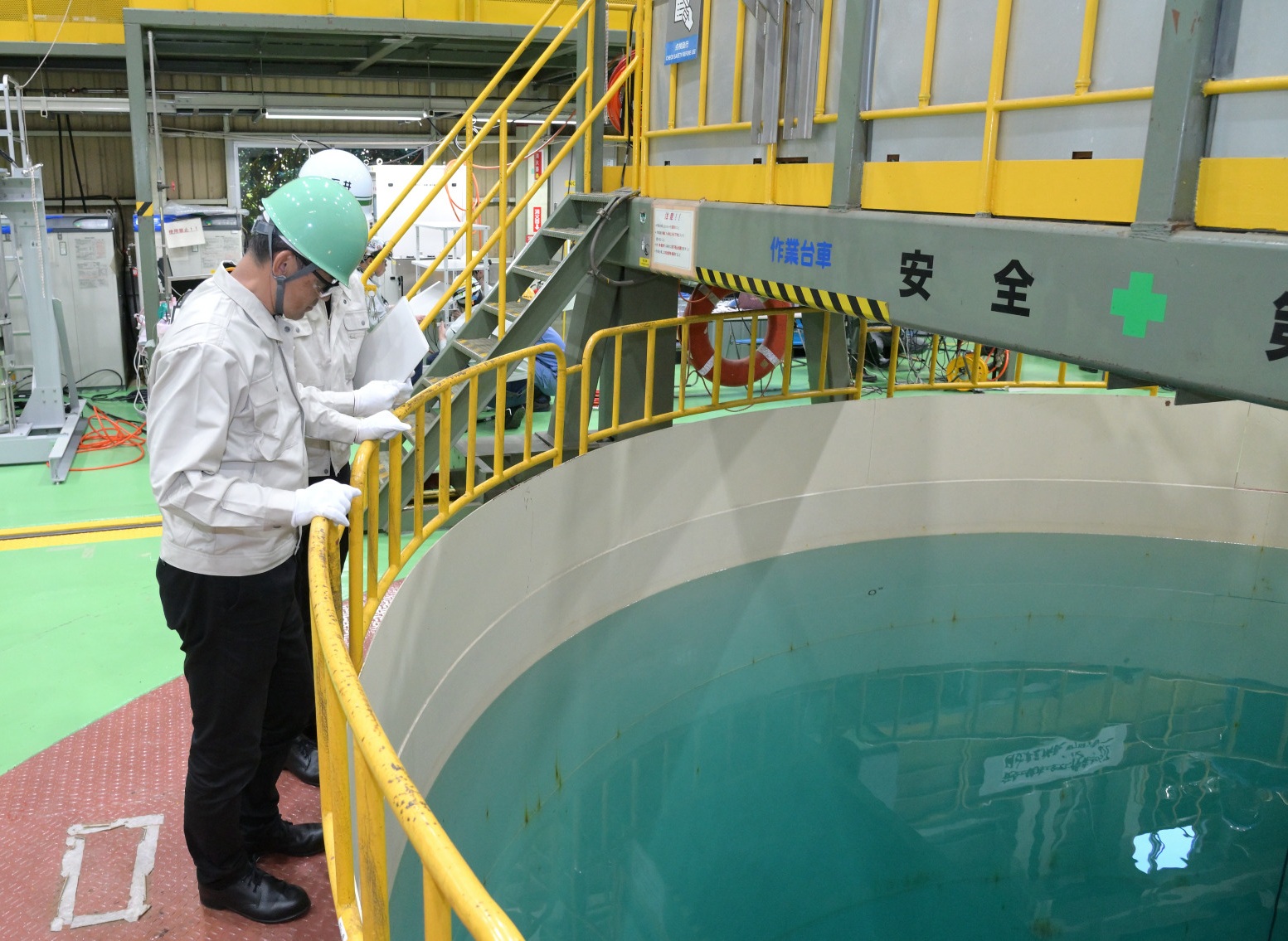
The massive pool at the in-reactor training facility.
“For debris of unknown shapes, they created over 20 dedicated retrieval jigs based on images.
To complete the work within the limited timeframe, they trained repeatedly using mock-ups. Back in 2013, I was right in the thick of nuclear energy-related reporting. Had I known such training was going on here, I would have definitely covered it,” Matsui reflects.
Next, Matsui visited the High-Performance Control Rod Seismic Scrammability Test Facility, which conducts verification tests on emergency reactor shutdown functionality during major earthquakes. Here, a full-scale mock fuel assembly, actual control rods and control rod drives are installed inside a large test vessel. Tests conducted here simulate earthquake-like shaking to check whether control rods can be accurately inserted during shaking to initiate a “scram” (an emergency shutdown of the reactor). According to Group Leader Takayuki Arakawa, who oversees the tests, only one other manufacturer besides Hitachi possesses such a test facility. He says that Hitachi's installation is the world's largest dedicated facility capable of generating such intense shaking.
This test facility can conduct tests for all BWR core types, including the ABWR. Using two vibration generators enables the creation of tremors that closely resemble actual earthquakes, simulating the behavior of fuel assemblies under real seismic conditions. The structure incorporates laminated rubber used for seismic base isolation, minimizing the impact of vibrations on the surrounding area during experiments. Because the fuel assemblies are fixed at both ends (top and bottom), the central portion bends like a bow when shaking is applied. Here, tests are conducted under conditions where the maximum amplitude reaches ±60mm. For reference, based on analyses of seismic intensity and seismic waves from the Great East Japan Earthquake in 2011, the amplitude of oscillation for fuel assemblies at the Fukushima Daiichi Nuclear Power Station at the time of the accident was estimated at about half this value. This test facility also conducts tests under extremely stringent conditions. After confirming the maximum amplitude has been reached, a scram is performed manually to verify that control rods can be inserted without issue.
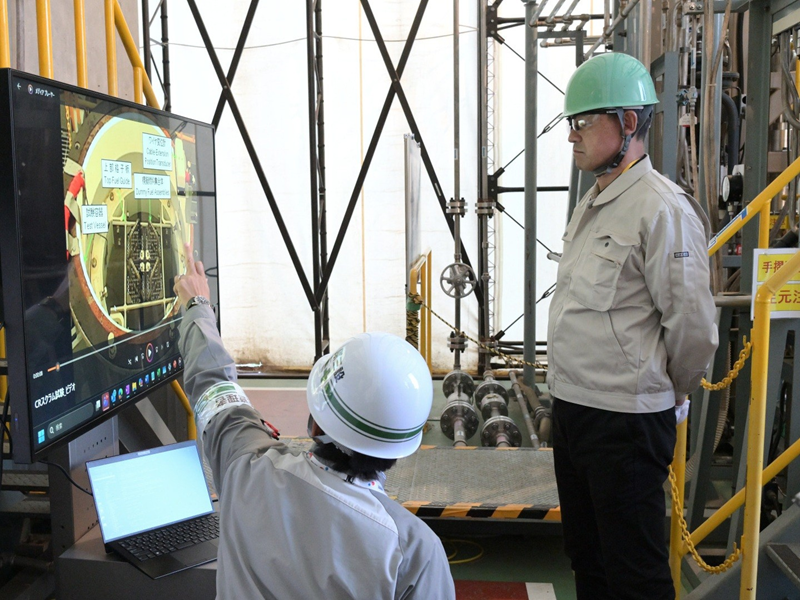
“The fundamental principles for ensuring nuclear power plant safety are said to be threefold: stop (halt the nuclear fission reaction), cool (cool the core), and contain (contain radioactive materials). In particular, 'stop' is the top priority for safety. During the Fukushima Daiichi Nuclear Power Station accident, all scram procedures were executed normally, achieving the goal of stopping the reactors. Here, they are testing and checking operation under even more severe conditions than that,” explains Matsui.
At the end of the tour of the Rinkai Factory, Matsui had the opportunity to experience operating HUMALT: a soft-structured work robot being developed for use in decommissioning work at the Fukushima Daiichi Nuclear Power Station.
Since HUMALT is designed for use in high-radiation environments, it does not carry electronic components such as motors, sensors, or electronic circuitry on its body. Instead, it uses hydraulic cylinders as actuators. Eliminating electrical systems from the main body of the unit not only makes it less susceptible to the effects of radiation, but also well-suited for underwater operations. According to the development team, it is being developed with not only decommissioning work but also other applications—such as routine reactor inspection tasks—in mind. Using water pressure instead of oil pressure offers the advantage that, in the unlikely event of damage to the robot body, only water would leak out, minimizing impact on the site environment.
The demo unit prepared on this occasion featured two arms, performing an operation where the left arm holds the base of a valve while the right arm rotates it. While rotating a valve may seem simple at first glance, it requires fine adjustments of force applied and high positioning accuracy, making it a difficult movement for motor-driven robots.
HUMALT has arms with eight joints each (including redundant joints), with two hoses connected to each joint for hydraulic actuation. This design enables flexible joint movement and easy adjustment of position and force, enabling tasks beyond turning rigid valves, such as slinging (attaching ropes to objects for lifting).
Another key feature of HUMALT is its flexible mobility configuration, enabling it to switch between crawler-type and multi-leg walking mechanisms tailored to specific applications.
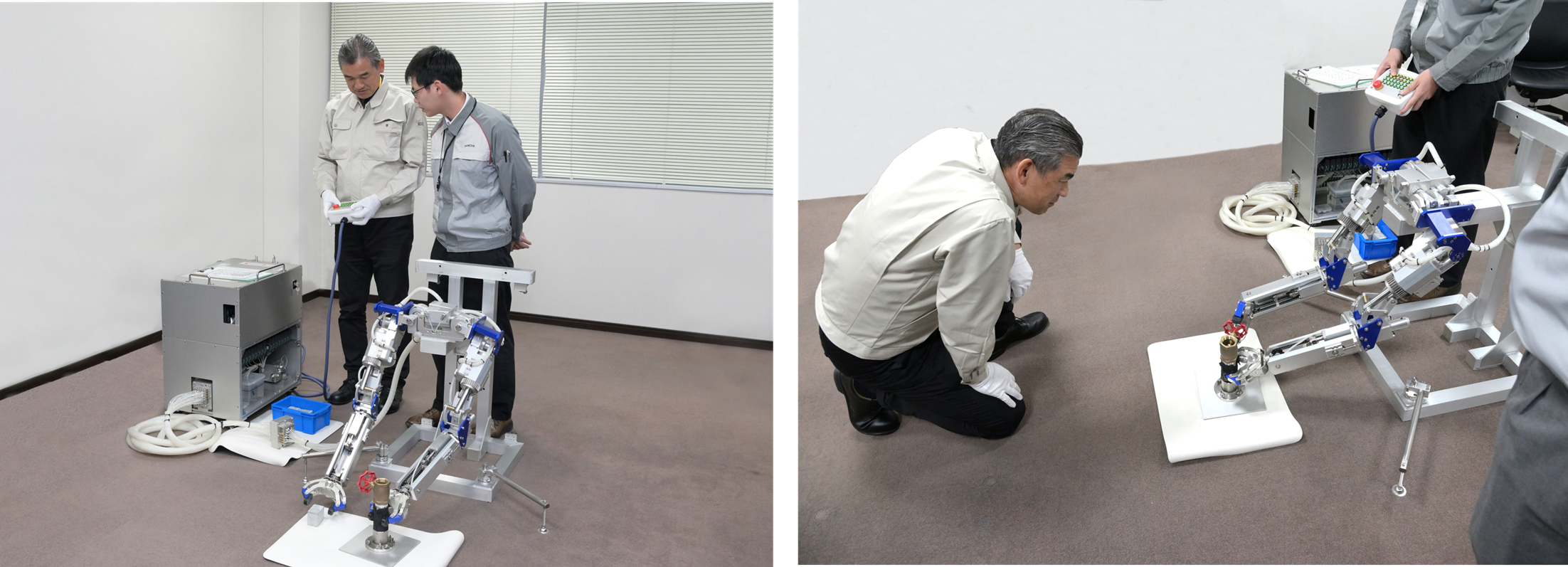
Matsui tries his hand at operating HUMALT himself, attempting to grasp a block. “We depend on robots in environments that are otherwise inaccessible to humans, so I have high hopes for their technological progress. This HUMALT unit is surprising—it can purposefully generate strong forces using hydraulic pressure for risk avoidance while also moving flexibly,” says Matsui.
After reporting on the Rinkai Factory, Matsui travelled to the Hitachi Works Futo Factory, about three kilometers away, for an internal tour. National Route 245 connects these locations and serves as the route for trailers carrying large products from Hitachi City factories like the Rinkai Factory to the port and Futo Factory. For this reason, its roadbed is reinforced beyond the level of standard roads to withstand the transportation of heavy cargo. In addition, two pedestrian bridges along the route (called “vertical-lift bridges” ) feature an electric winch system that raises the span section to a height that allows trailers to pass underneath. After hearing this explanation, Matsui expressed interest, saying, “I'd really like to see that in action. When is the next transport scheduled?”
The Futo Factory is located within the grounds of Pier 4 at the Port of Hitachi, which is part of the Port of Ibaraki. It is a factory capable of assembling large modules for nuclear power plants and loading them directly onto ships for transportation. In the case of land transportation, modules must be divided into blocks weighing several tens of tons and transported separately, requiring major assembly work at the power plant construction site. Sea transportation, on the other hand, allows for large modules weighing well over a hundred tons to be completed as a single unit for bulk shipment, reducing transportation costs. This approach also has advantages in that it shortens construction schedules, reduces building costs, and facilitates quality control during assembly.
Another advantage of the Futo Factory is its direct connection to the port's bonded area, enabling customs clearance procedures for overseas exports.
On this day, Matsui visited manufacturing sites that support nuclear safety and confirmed the current state of Hitachi's nuclear energy business. “Through this visit, I gained significant insights by witnessing things that are difficult to see from the outside,” says Matsui. He concluded his report as follows.
“While power companies are featured prominently in news about nuclear power plants, behind the scenes are manufacturers like Hitachi, producing metal casks and removing debris. I believe the general public is largely unaware of this. Despite this, Hitachi's approach of building such large-scale testing and training facilities and earnestly pursuing not only product performance and quality but also operational quality will surely remain unchanged, whether the world knows about it or not. This approach is rooted in the Founding Spirit and corporate ethics I've seen embodied in places such as Hitachi Origin Park. Today, I was able to catch a glimpse of how these ceaseless efforts that are unseen from the outside support not only nuclear energy, but also the foundation of Japanese industry as a whole.”
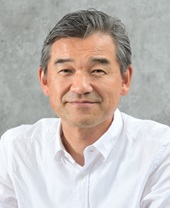
Yasumasa Matsui
Freelance Announcer and Journalist
Born in Inami, Nanto City, Toyama Prefecture. Graduated from Toyama Prefectural Takaoka High School. Graduated from the Department of Chemical Engineering, School of Engineering, Tokyo Institute of Technology (now Institute of Science Tokyo). In 1986, he joined TV Asahi as an announcer. He co-hosted Music Station with Tamori, served as a sportscaster on News Station, and worked as a news and information anchor on programs such as Station Eye, Wide Scramble, and Yajiuma Plus.
In 2008, he became the principal of TV Asahi's announcer school, Ask. During his two years in this role, he trained over 100 announcers who went on to work nationwide. In March 2011, following the 2011 Great East Japan Earthquake (and subsequent Fukushima Daiichi Nuclear Power Station accident), he transferred from the announcer department to the news department as a reporter covering the nuclear power plant accident. He later served as a reporter covering the Imperial Household Agency and weather-related disasters, and worked as a commentator. In 2023, after leaving TV Asahi, he established his own agency, OFFICE Yuzuki. He also serves as a plastic model history research advisor for Tamiya Inc., ambassador for Nanto City, Toyama Prefecture, and media advisor for sake company, DASSAI Inc.
 Part 1|MESSAGE: What I Want to Know and Communicate as an Announcer with a Science Background - The Present and Future of Nuclear Power Generation
 Extra Edition|The Day to Realize the Importance of Energy in Future Society - Report on HSIF2025 JAPAN, OSAKA and Expo 2025 Osaka, Kansai
 Part 2|INTERVIEW: Interview with Kohei Hisamochi, President of Hitachi GE Vernova Nuclear Energy - Taking the Nuclear Energy Business to the Next Phase. (First Half)
 Part 2|INTERVIEW: Interview with Kohei Hisamochi, President of Hitachi GE Vernova Nuclear Energy - Taking the Nuclear Energy Business to the Next Phase. (Second Half)
 Part 3|FIELD REPORT: Chugoku Electric Power's Shimane Nuclear Power Station Unit 3 nears completion! The relentless pursuit of safety and reliability seen at the latest plant under construction
 Part 4|FIELD REPORT: The Hitachi Area in Ibaraki: A Journey that Explores Hitachi's Past, Present and Future (1) Tracing the origin of the Hitachi Founding Spirit and social innovation
 Part 4|FIELD REPORT: The Hitachi Area in Ibaraki: A Journey that Explores Hitachi's Past, Present and Future (3) Research and development that write the next chapter in nuclear technology
 Part 4|FIELD REPORT: The Hitachi Area in Ibaraki: A Journey that Explores Hitachi's Past, Present and Future (4) Nurturing people and growing with the region: the spirit of Hitachi seen through the WorldSkills Competition and co-creation projects
 Part 5|FIELD REPORT: To the Frontlines of the Decommissioning of Fukushima Daiichi Nuclear Power Station―Tracing the Path Forward through Reporting from the Field
 Part 6|MESSAGE: Facing the Current State of Nuclear Energy Through the Lens of the Field and Facts―What It Means to Build Up Trust From the Perspective of Hitachi's Nuclear Energy Business


